A Hill Station Wedding in Black & White — Saputara, Gujarat
Saputara is Gujarat’s only hill station — and on this particular night, it held a wedding that felt exactly like the place itself: unhurried, beautiful, and entirely itself.
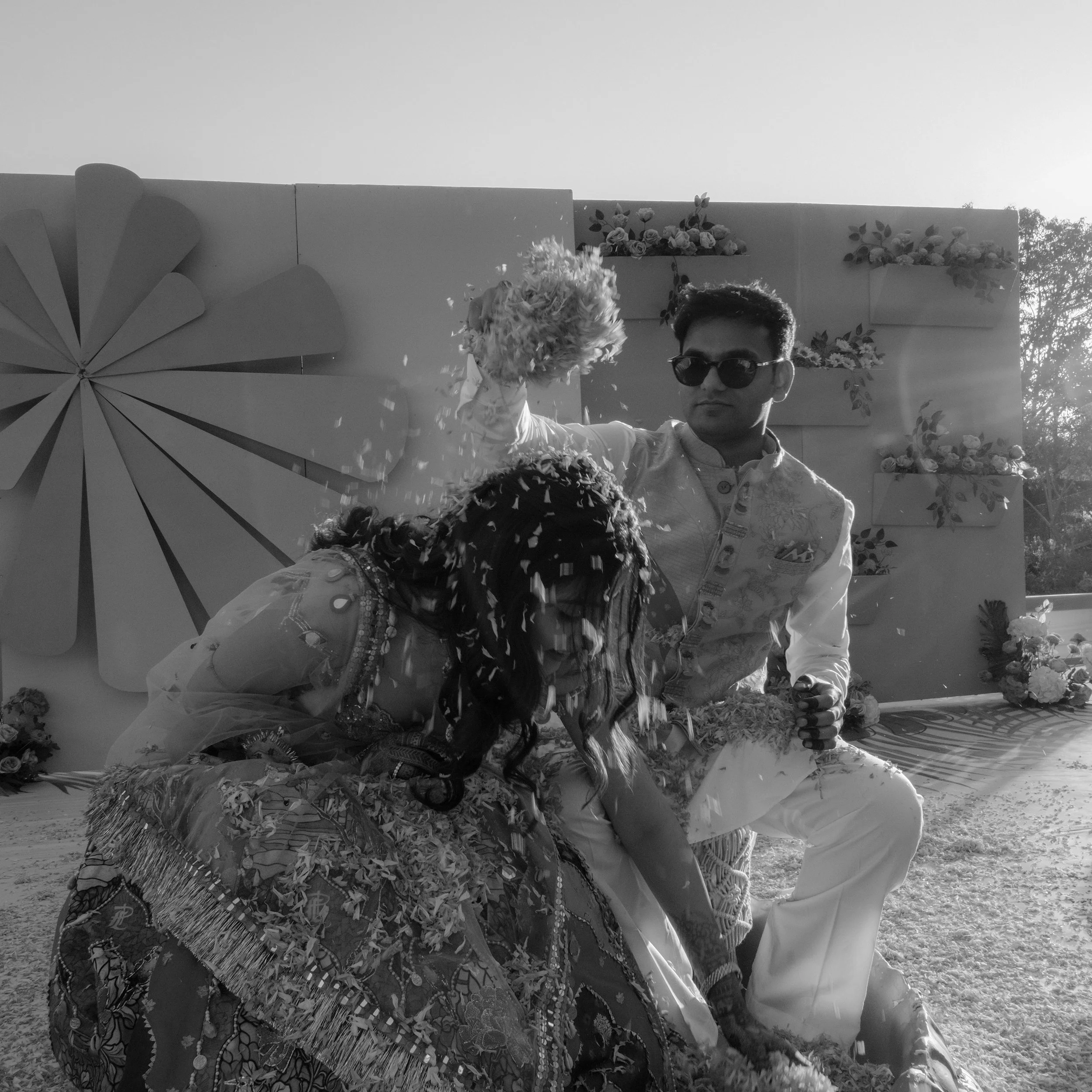
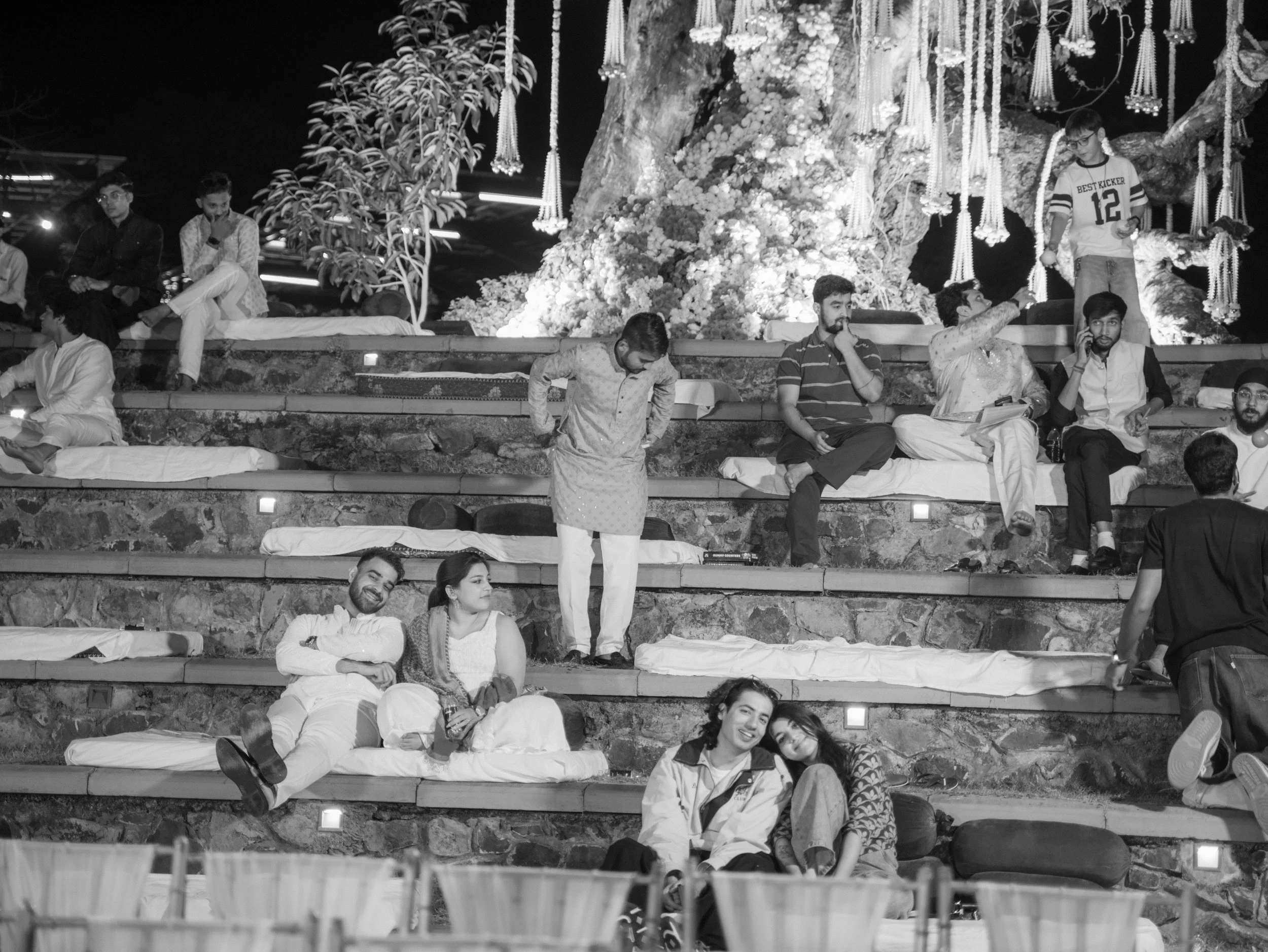
This is a real wedding. No direction, no posed portraits, no orchestrated lighting. Just a couple, their people, a gnarly old tree strung with marigold garlands and fairy lights, and a camera that tried to stay out of the way. Every photograph here happened on its own.
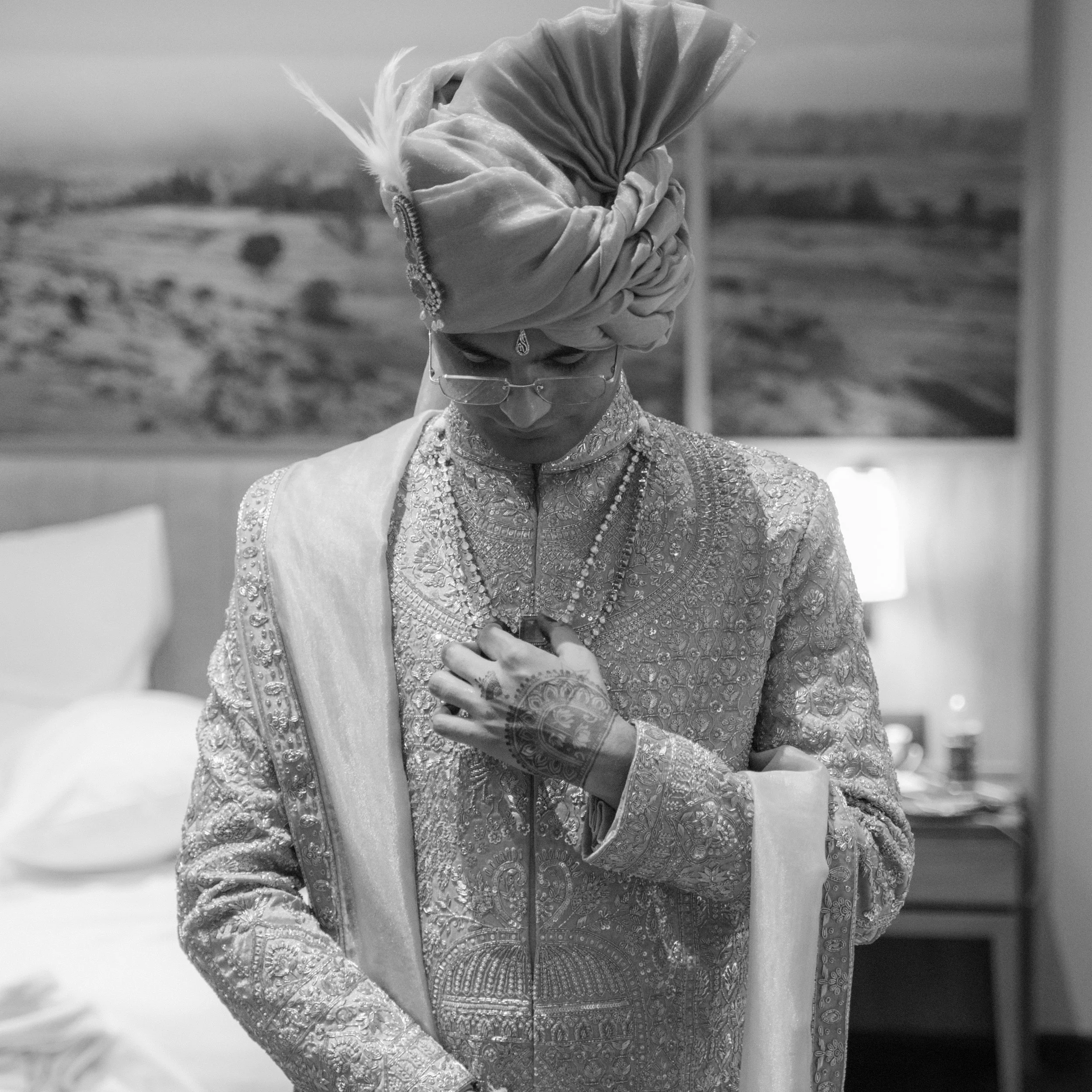
Getting Ready: The Quiet Before the Baraat
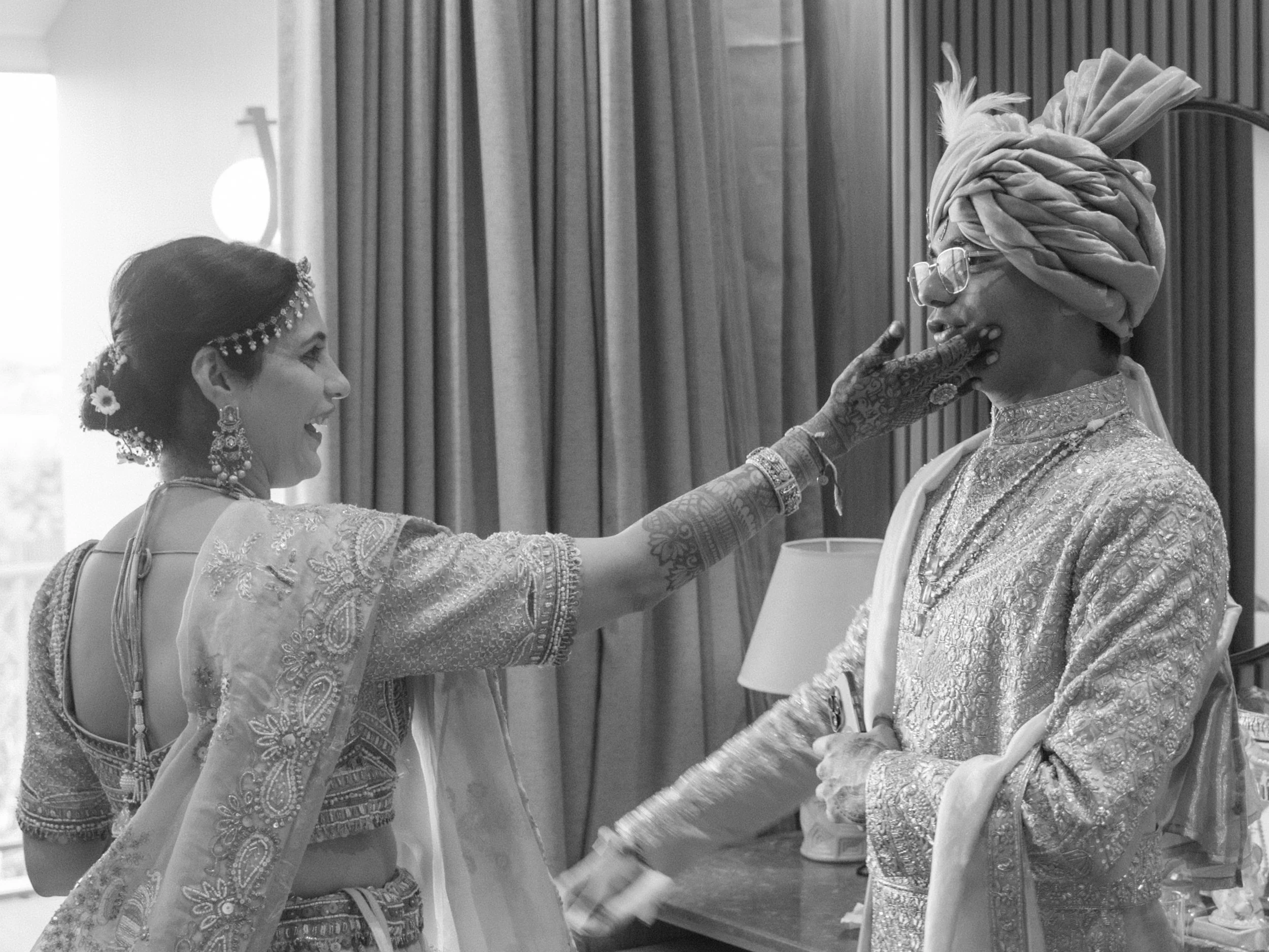
This is the part nobody really photographs well. The in-between moments. Someone tucking in a shirt. A bride looking out a window. Your hands fidgeting because you know something huge is about to begin.
These two? They laughed through most of it.
The Baraat: When the Night Officially Begins
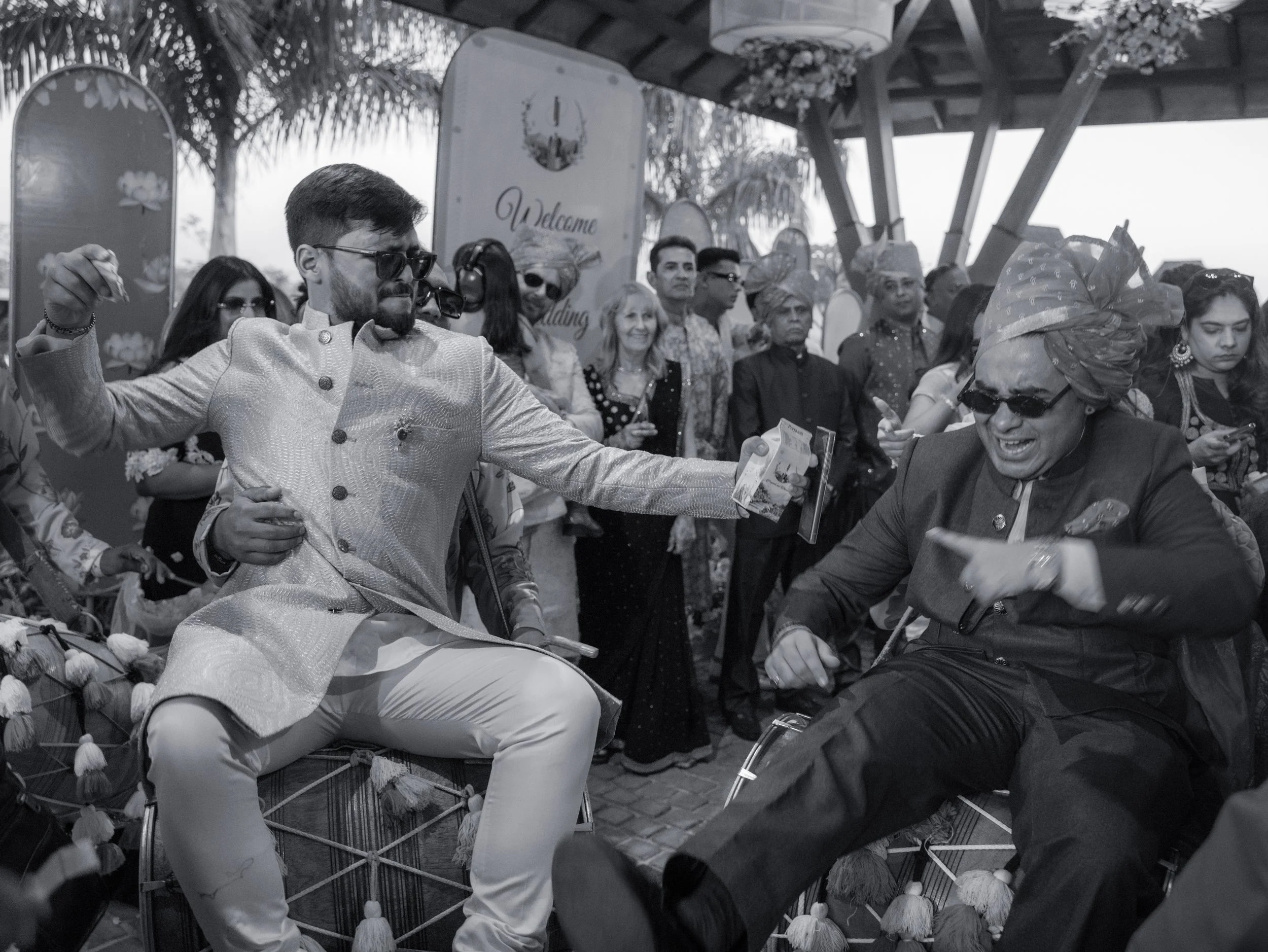
A baraat doesn’t ease you in. It starts — full volume, all at once. Dhols, lights, dancing that nobody rehearsed. The groom rides or walks into it and the crowd just absorbs him. If you wanted a calm entrance, you chose the wrong tradition. Lean in. It’s more fun.
The centrepiece of this Saputara wedding was a large, gnarled tree at the heart of a stone courtyard — dressed in hanging floral garlands and warm fairy lights. Outdoor hill station venues in Gujarat often have this kind of natural character that no amount of decoration can manufacture. The couple found each other under it, someone set off sparklers, and for about three seconds the whole wedding stood still.
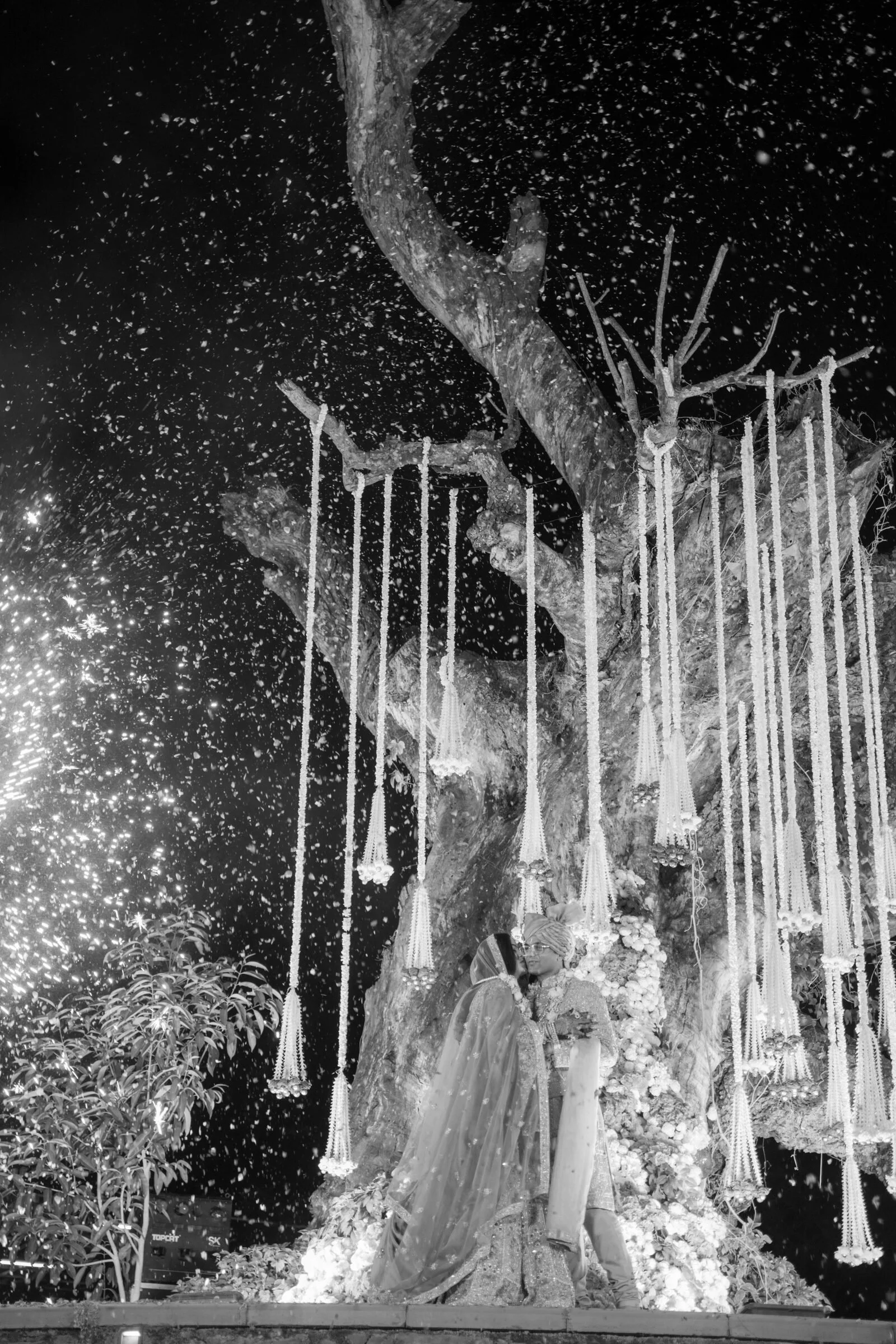
“There’s a moment at every wedding where everything settles — just for a second — and it’s only the two of you.”
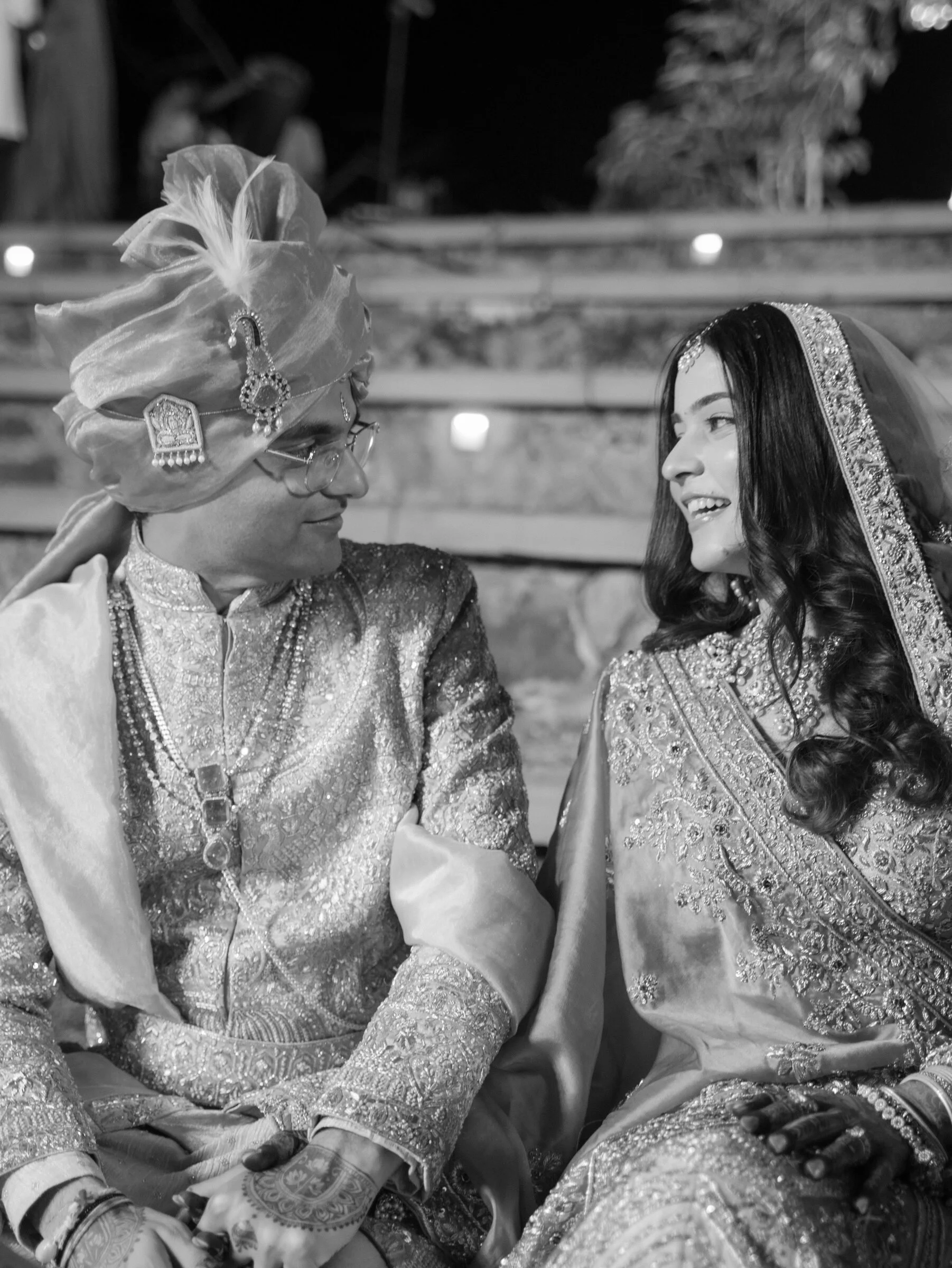
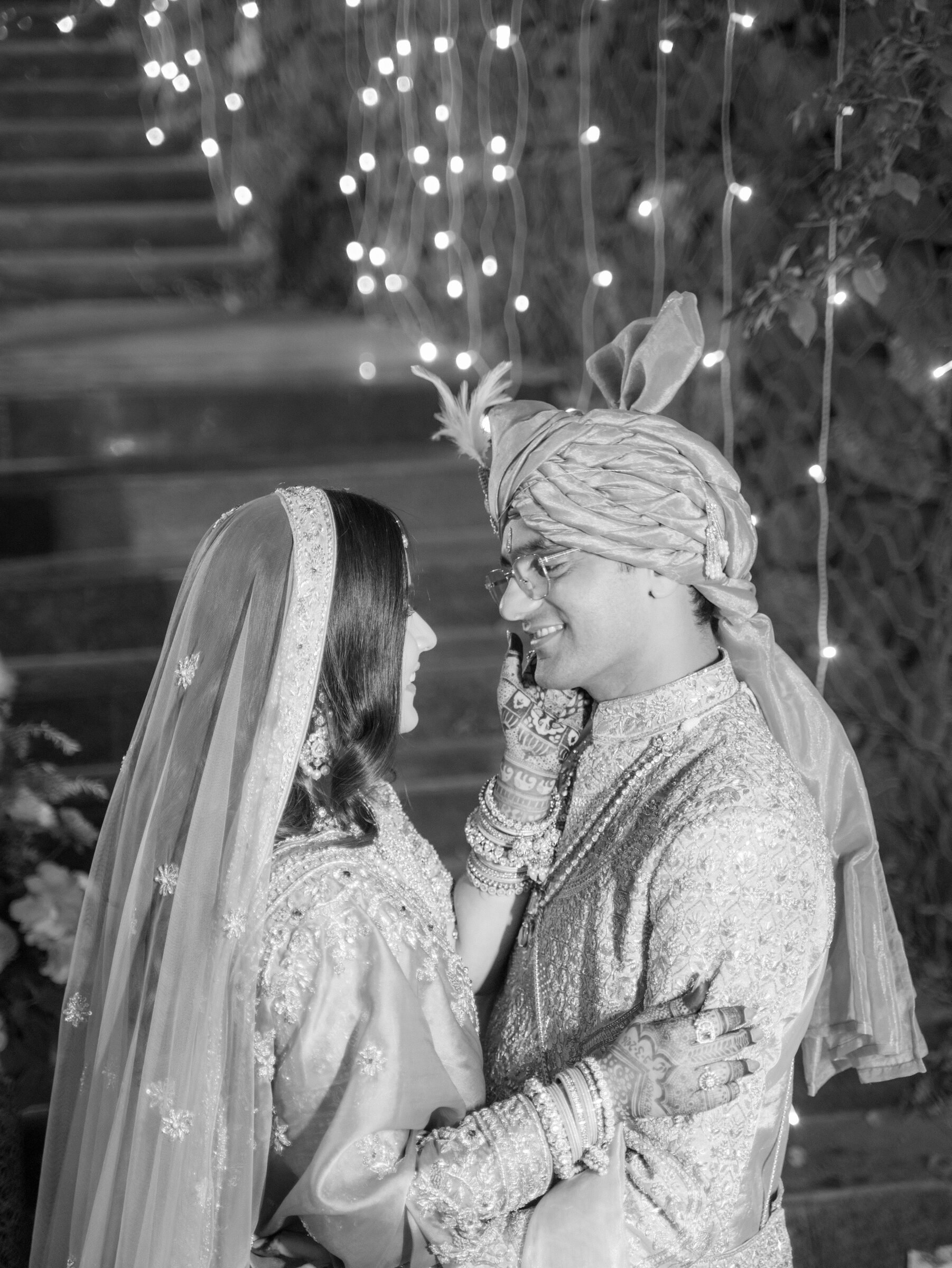
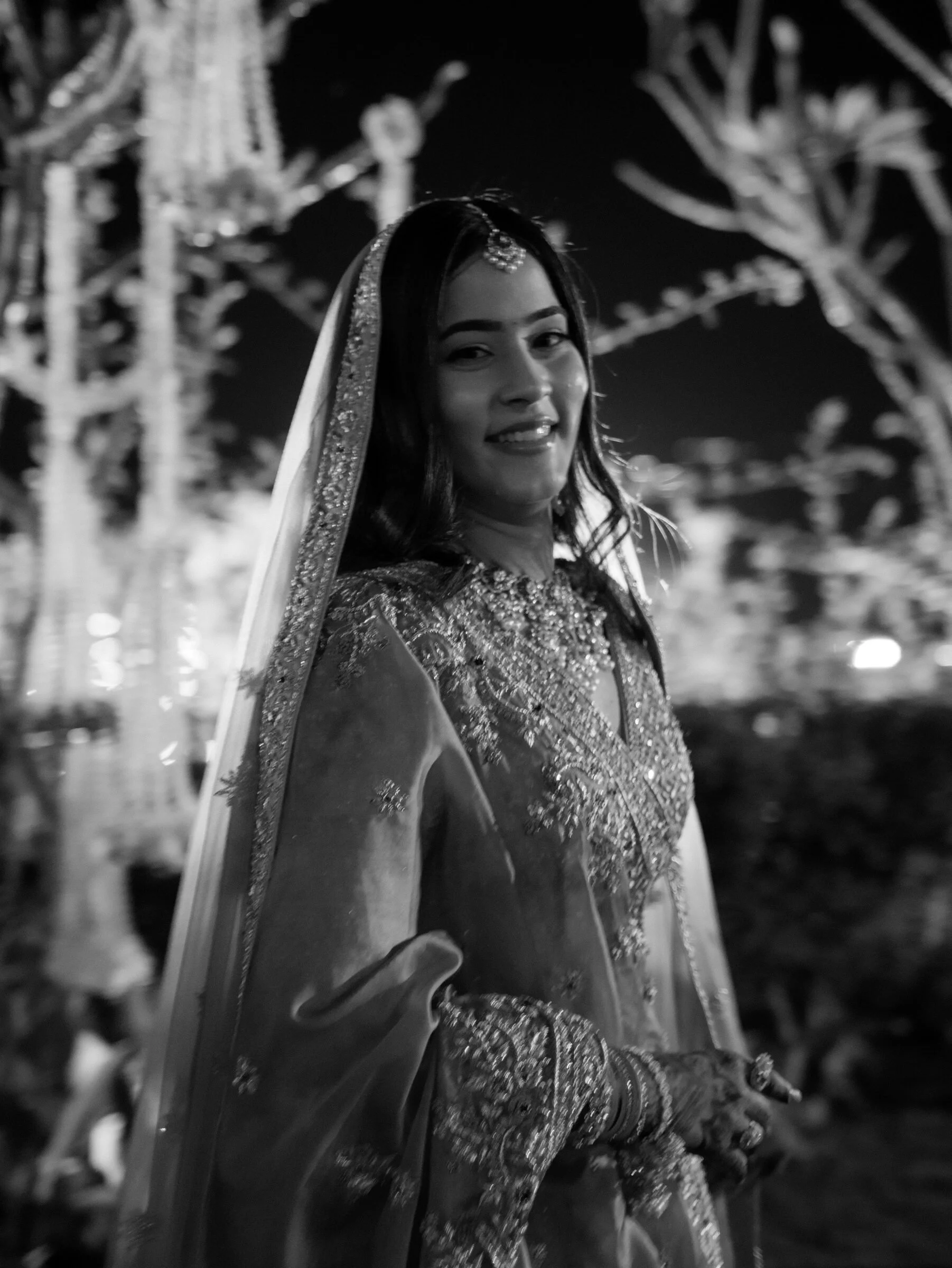
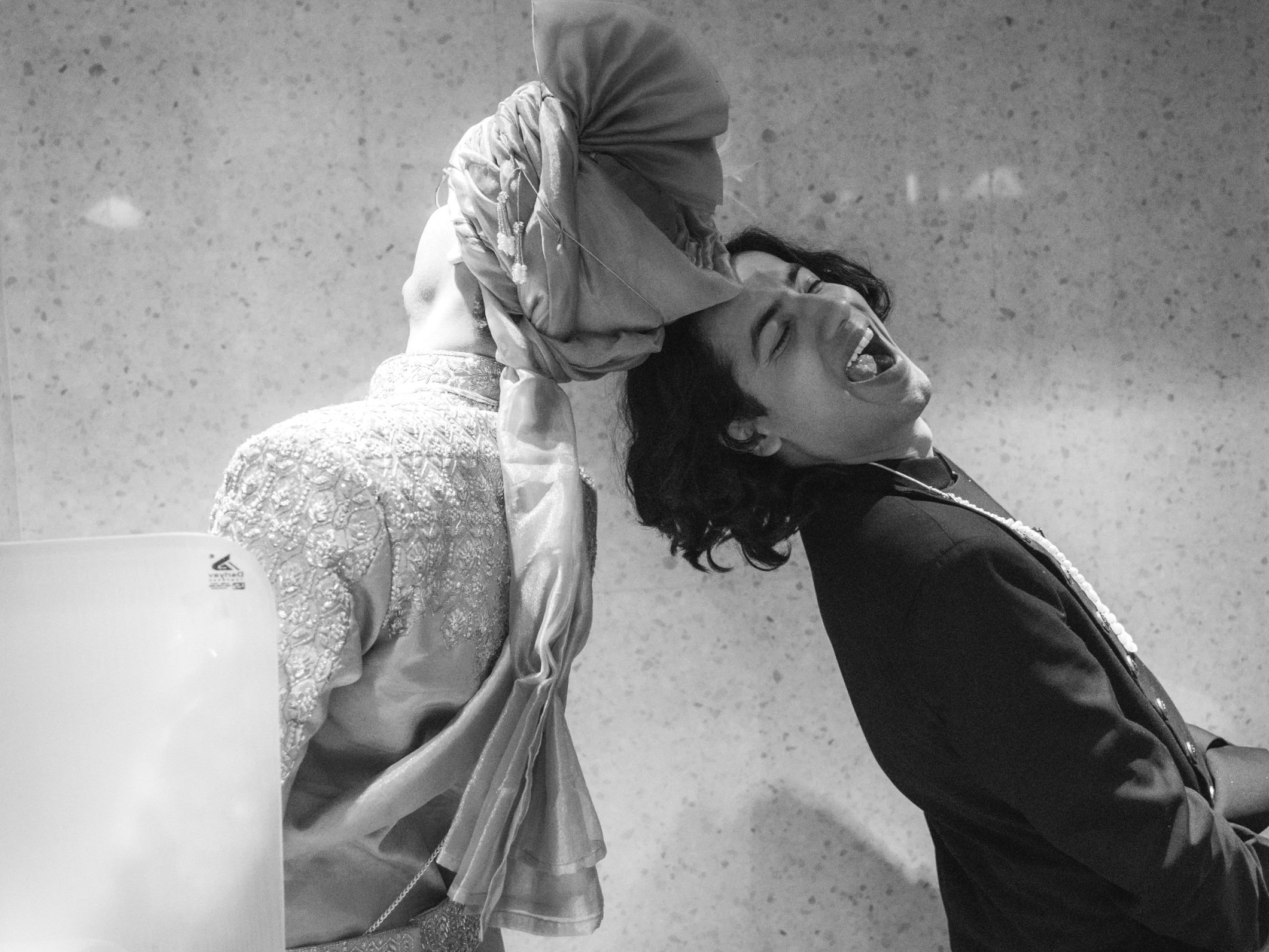
The things that go slightly sideways are the things you retell for years. The safa that slipped. The speech that ran long. The uncle who needed everyone to know he was having the time of his life. Black and white photography has a way of making these moments look like they were always meant to happen.
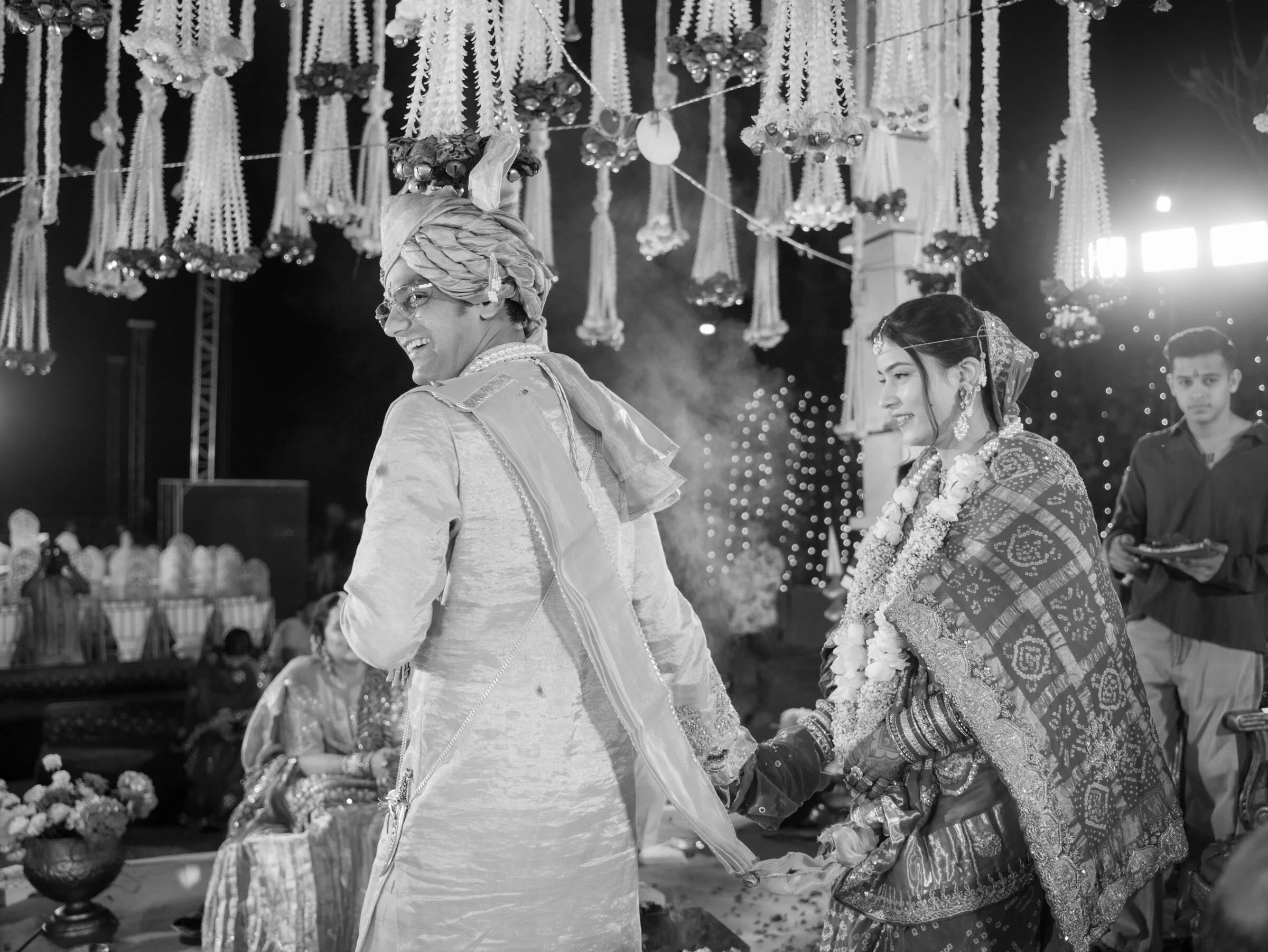
The ceremony mandap was set against a stone wall hung with fairy lights and floral chandeliers — a setting that made the rituals feel ancient and intimate at once. In a Hindu wedding ceremony, the pheras (seven circumambulations around the sacred fire) are the heart of the union. This groom turned to look at his bride mid-phera with a grin that said everything the mantras were saying, but louder. After the pheras, sindoor daan — the groom applies vermilion to the bride's parting — and the mangalsutra, the sacred necklace that marks the marriage complete.
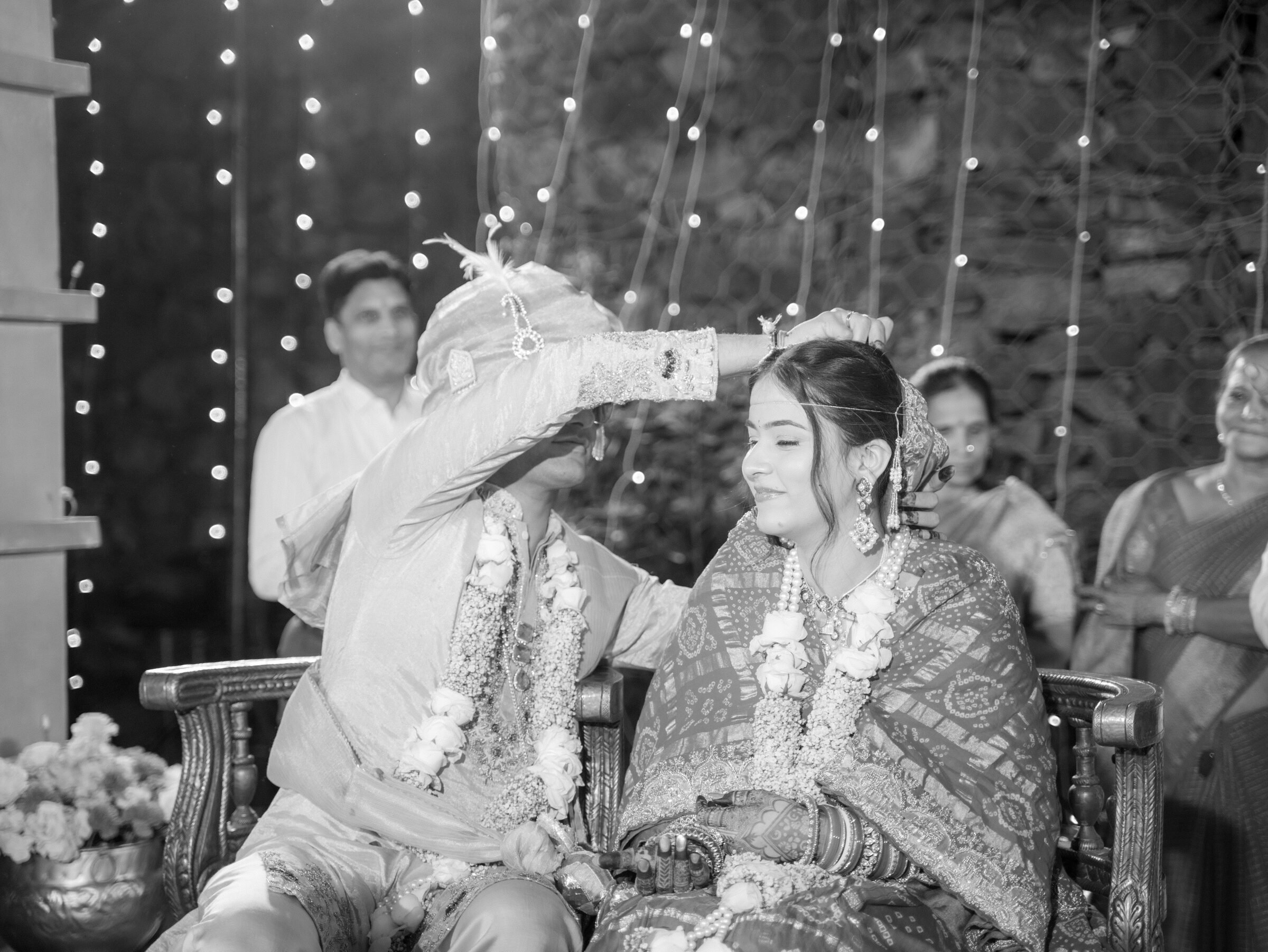
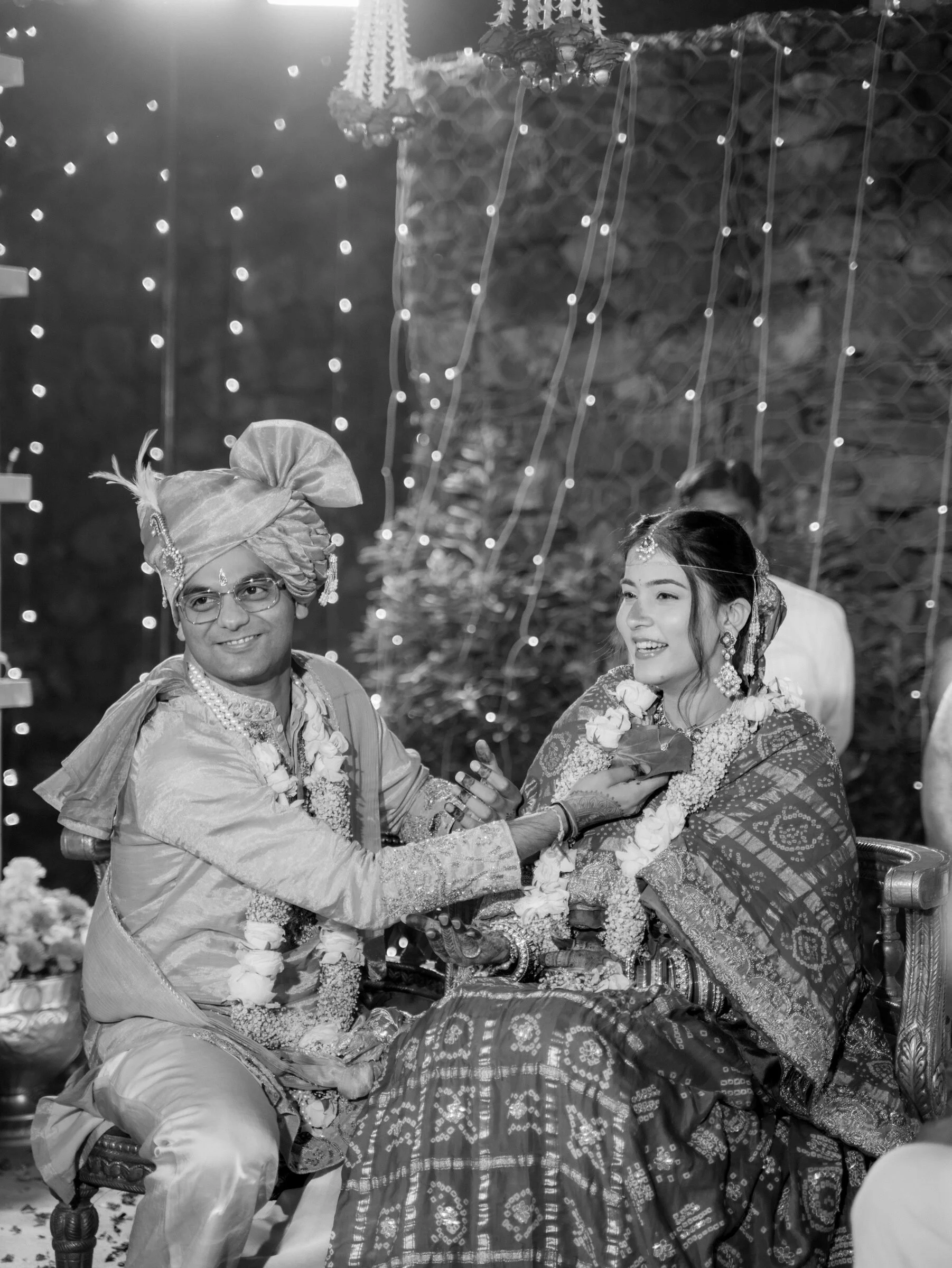
Late enough that the heels are off and the flowers are wilting. Late enough that the only people still up are the ones who genuinely don't want it to end. This is also the wedding — maybe the truest version of it. Nobody's performing for anyone. The couple is just sitting together, somewhere in the middle of a night they'll never quite be able to describe.
If you're planning your wedding and you've found your way to this page — here's the one thing worth knowing: the photographs that will matter most aren't the ones you planned. They're the ones that happened while you weren't looking.
What is Saputara like as a wedding destination in Gujarat?
Saputara is Gujarat's only hill station, set in the Sahyadri mountain range near the Maharashtra border. Wedding venues there offer stone courtyards, natural tree canopies, and cool mountain air — a refreshing contrast to city banquet halls. The terrain and greenery make it especially beautiful for outdoor night weddings and candid photography.
What does a real Indian wedding ceremony include?
A traditional Indian wedding typically includes the baraat (groom's arrival procession with music and dancing), jaimala (exchange of flower garlands), pheras (seven sacred circumambulations around the fire), sindoor daan (groom applies vermilion to the bride's hair parting), and mangalsutra (groom places a sacred necklace on the bride). Each ritual has deep cultural and spiritual significance.
Why do some couples choose black and white wedding photography?
Black and white removes colour as a distraction, letting emotion and expression carry the image. It gives photographs a timeless quality — they don't look dated in five or ten years the way heavily colour-graded images sometimes do. For candid documentary coverage especially, black and white tends to feel raw and real rather than polished and performative.
What is candid or documentary wedding photography?
Candid wedding photography means the photographer documents events as they naturally unfold — without posing or directing the subjects. The photographer's job is to be present and observant, not to orchestrate. The result is a wedding story that feels genuine: the nervous laugh, the unexpected tear, the safa that falls at exactly the wrong moment.
What should couples look for when choosing a hill station wedding venue in India?
Look for venues with natural features — old trees, stone work, open courtyards — that give photographs inherent character without heavy decoration. In hill stations like Saputara, the ambient light and cooler temperatures also make outdoor night ceremonies much more comfortable and visually atmospheric than valley or city venues.
